
![Iran Oil Gas [JAN26]](/media/nrjf4q02/iran_oil-gas-jan26.jpg?width=920&height=380&v=1dcaa47045ee4c0)
Strait of Hormuz Disruptions Raise Shipping and Infrastructure Concerns
Escalating tensions involving Iran are slowing crude and LNG traffic through the Strait of Hormuz, where roughly 20% of global oil flows transit. As vessels anchor and maritime risk rises, pipeline bypass routes and inland infrastructure are drawing renewed attention.
By TYLER CAMPBELL, Editor-in-Chief, Pipeline & Gas Journal
(P&GJ) — Escalating conflict involving Iran is now affecting global energy transportation, with direct consequences for crude and liquified natural gas (LNG) flows through the Middle East.
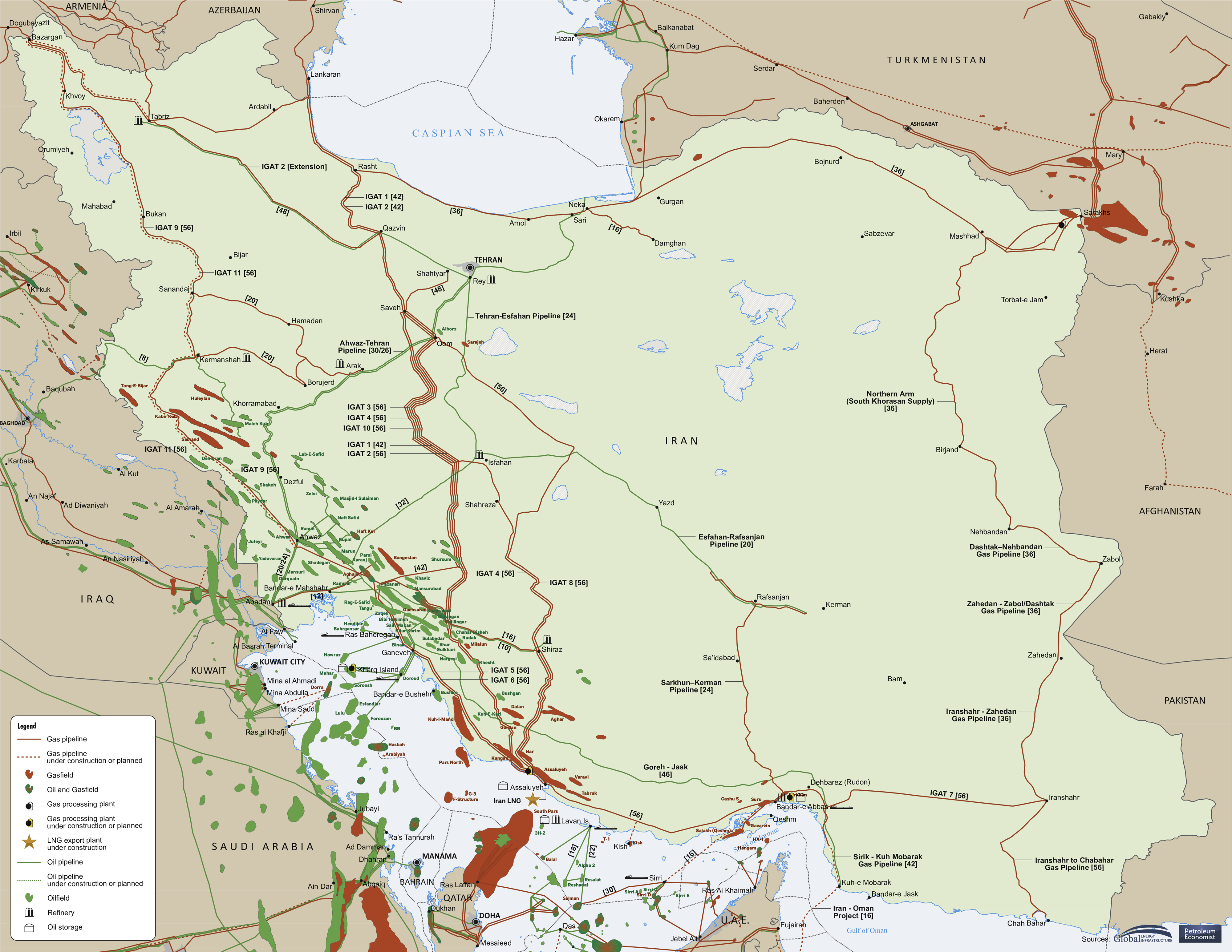
For this map and other related infrastructure developments, visit Global Energy Infrastructure.
Reuters reported that at least 150 vessels, including oil and LNG tankers, have dropped anchor in and around the Strait of Hormuz, with some ships reportedly damaged.1 The disruption has effectively slowed maritime energy flows through one of the world’s most critical energy corridors.
Another Reuters report claims vessel-tracking data indicating that crude and LNG carriers are anchoring outside the strait or avoiding transit altogether amid security concerns. The volume of vessels waiting shows how quickly geopolitical tensions can translate into physical transport disruptions.2
The Strait of Hormuz handles roughly 20% of global oil consumption flows, with major OPEC producers, including Saudi Arabia, Iran, the UAE, Kuwait and Iraq, exporting most of their crude through the passage, primarily to Asian markets. Qatar also ships the majority of it LNG through Hormuz.3
Implications for pipeline and midstream stakeholders. For pipeline operators and midstream developers, several themes are emerging. For one, maritime chokepoint risk is no longer a theory. When several vessels anchor, effective export capacity tightens regardless of upstream production levels.
In addition, pipeline bypass and inland routes may gain strategic value. Existing east to west crude pipelines in the Persian Gulf region may provide partial mitigation, but overall bypass capacity remains limited relative to normal seaborne volumes.
Finally, the price and insurance volatility will likely follow the transport disruption. Even temporary slowdowns in Hormuz traffic can elevate freight rates, insurance premiums and delivery timelines, affecting contracts and operational planning across the supply chain.
The situation remains fluid, and conditions in the region could change rapidly. However, a large share of the world’s oil and LNG moves through one narrow corridor. When traffic slows down or stops, it can affect energy supplies globally. This could highlight why it is important to have more than one method of transporting oil and gas. Pipelines and other inland routes can help reduce risk and keep energy flowing if shipping lanes are disrupted.
LITERATURE CITED
1 Reuters, “Iran conflict disrupts global shipping as tankers are stranded, damaged,” March 2026, online: https://www.reuters.com/business/energy/iran-conflict-disrupts-global-shipping-tankers-are-stranded-damaged-2026-03-02/
2 Reuters, “Hundreds of ships drop anchor in Middle East Gulf, data shows,” March 2026, online: https://www.reuters.com/business/energy/hundreds-ships-drop-anchor-middle-east-gulf-us-war-iran-escalates-data-shows-2026-03-01/
3 Reuters, “What is the Strait of Hormuz and why is it so important for oil?,” February 2026, online: https://www.reuters.com/world/middle-east/what-is-strait-hormuz-why-is-it-so-important-oil-2026-02-28/#:~:text=The%20strait%20lies%20between%20Oman,km)%20wide%20in%20either%20direction.