

UAE Fast-Tracks Fujairah Pipeline to Expand Oil Exports Beyond Hormuz
The UAE is accelerating construction of a new Fujairah oil pipeline aimed at sharply increasing export capacity while reducing reliance on the Strait of Hormuz.
(P&GJ) — The United Arab Emirates is speeding up development of a major new oil pipeline to Fujairah as regional tensions continue disrupting crude flows through the Strait of Hormuz, according to reporting from Egypt Oil & Gas.
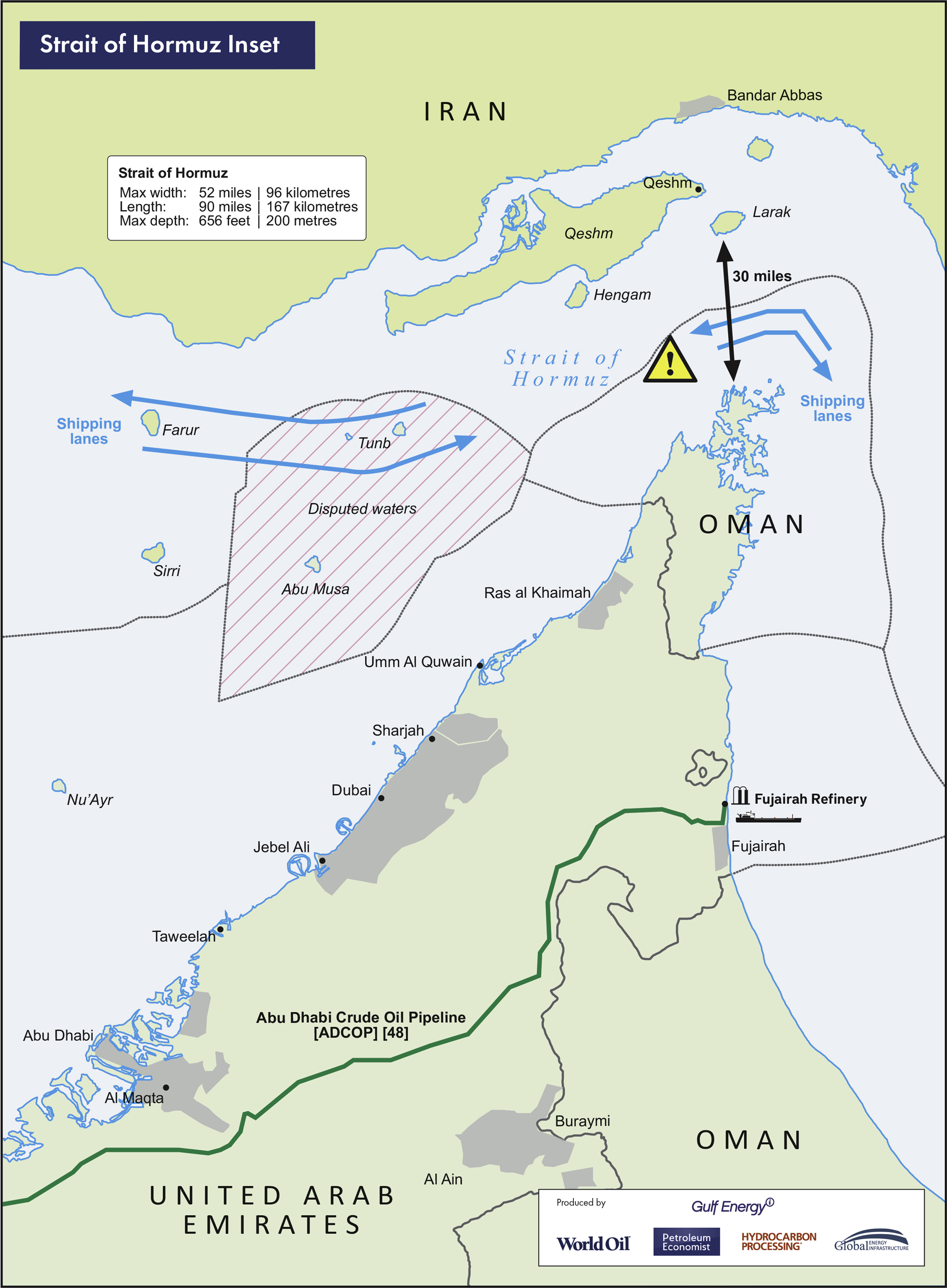
The pipeline project, overseen by Abu Dhabi National Oil Company (ADNOC), is designed to significantly expand the country’s ability to export crude without relying on the Hormuz shipping corridor. UAE officials are targeting a sharp increase in export capacity by 2027 through the new Fujairah route.
The move comes amid escalating regional instability following military strikes involving Iran earlier this year. Since the conflict intensified, disruptions tied to the Strait of Hormuz have tightened global energy supplies and increased pressure on Gulf producers to secure alternative export pathways.
The UAE already operates the Habshan-Fujairah pipeline, which can move approximately 1.8 million barrels per day of crude oil to the Gulf of Oman. According to Egypt Oil & Gas, ADNOC plans to substantially increase export capacity through the new West-East pipeline expansion as the country also boosts overall crude production.
Saudi Arabia remains the only other major Gulf producer with significant infrastructure capable of bypassing Hormuz through its East-West crude pipeline system. Other regional exporters, including Kuwait, Iraq, Qatar and Bahrain, remain heavily dependent on the strategic waterway.
Fujairah and nearby Khor Fakkan have become increasingly important energy and logistics hubs during the regional conflict, though recent attacks and shipping disruptions have highlighted ongoing vulnerabilities along the UAE coast.
The pipeline expansion is expected to strengthen the UAE’s long-term export flexibility while improving energy security amid continuing instability across Middle East oil markets.