
New Pipeline Technologies Advance Testing, CUI Protection and Temperature Measurement
What’s New in Products & Services
Charps approved for hydrostatic pipeline testing in California
Pipeline infrastructure contractor Charps LLC has been approved to provide hydrostatic testing services in California after being confirmed as an approved service provider by the California Department of Forestry and Fire Protection. The designation makes Charps eligible to perform hydrostatic pipeline testing in the state, where pipeline safety standards limit the number of approved vendors.
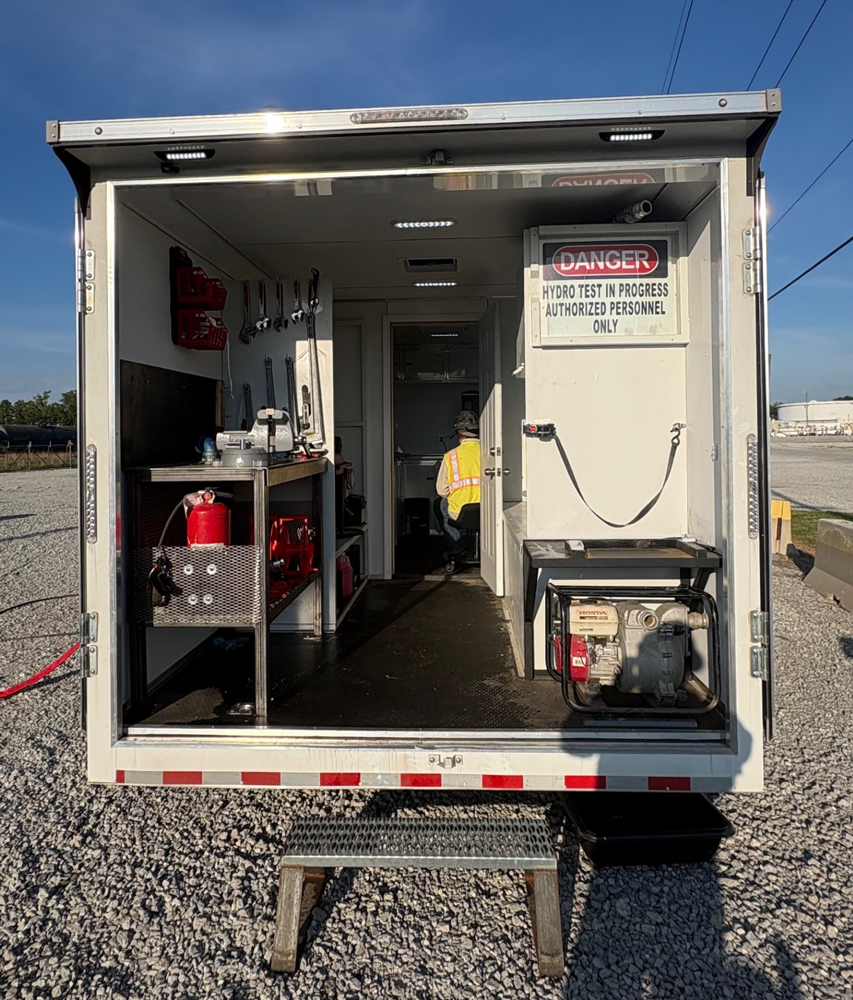
Charps said it demonstrated in-house expertise and resources for pipeline integrity testing, including hydrostatic test planning and execution, as part of the approval process. The company provides construction, maintenance, integrity and emergency response services across North America.
In California, Charps plans to pair its hydrotesting services with real-time monitoring, leak detection and digital reporting through its subsidiary, PipeSense. PipeSense’s PipeTest platform uses dynamic pressure pulse technology to provide pressure trending, stabilization insights and AI-supported leak detection data through customer dashboards.
Charps and PipeSense are also exploring the use of mobile pressure test trailers for regional operators. The trailers are designed to serve as onsite testing hubs for hydrostatic testing work. Charps CEO Joe Van Vynckt said the approval opens new opportunities for the company in California.
For more information, visit: https://www.charps.com/pipeline-services/
Industry group launches new effort to reduce corrosion under insulation
A coalition of energy companies, coating manufacturers and research organizations has completed the first phase of a joint industry project aimed at improving the detection, prevention and long-term management of corrosion under insulation (CUI), one of the oil and gas industry’s most persistent asset integrity challenges.
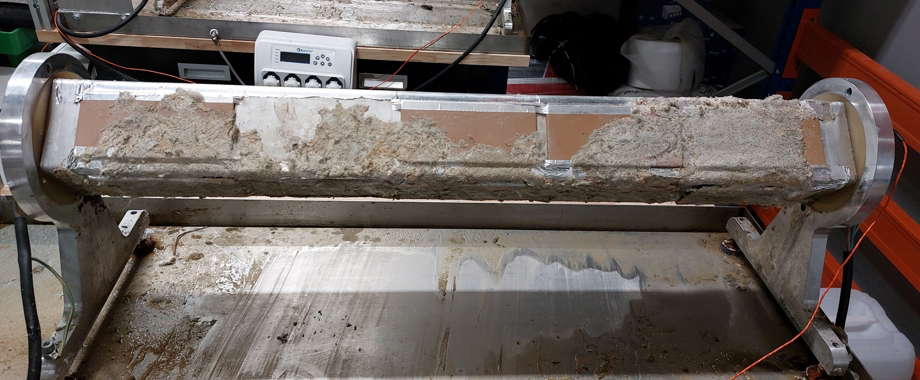
The project, led by Belgian research and innovation center SIRRIS, evaluated new coating test methods and moisture monitoring technologies designed to help operators better understand coating degradation and reduce the risk of CUI-related failures.
CUI remains a leading cause of equipment degradation across the oil, gas and petrochemical sectors and is estimated by DNV to contribute to roughly half of all hydrocarbon leaks in the industry.
The project focused on evaluating moisture sensors installed beneath insulation and comparing accelerated laboratory testing with longer-term exposure testing to better understand how protective coatings perform under realistic operating conditions.
Testing subjected coated steel to repeated wet-dry cycles between 80°C (176°F) and 140°C (284°F) to simulate operating environments commonly found in industrial facilities.
Participants also assessed the use of electrochemical impedance spectroscopy (EIS) as a tool for evaluating coating degradation beneath insulation. While researchers said the technique shows promise, additional work is needed before it can be widely adopted for field inspections.
The project also established a collaborative forum for operators, coating suppliers and researchers to compare testing methods and share operational experience.
A second phase of the project is scheduled to begin this summer. Researchers plan to further investigate coating degradation mechanisms, refine laboratory testing methods, expand evaluation beyond epoxy coatings to multi-polymeric systems and continue improving EIS and visual inspection techniques. The group will also assess whether the findings could support future industry testing standards.
Sherwin-Williams introduces thermal coating targeting CUI
Sherwin-Williams has introduced Heat-Flex AEB, a thermal insulating coating the company says can replace traditional insulation systems while helping eliminate CUI on storage tanks, process vessels and piping.
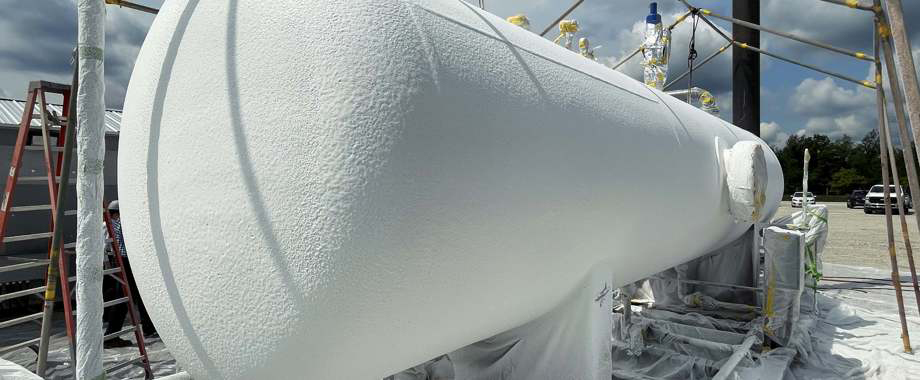
According to Sherwin-Williams, the coating is designed to retain operating temperatures of up to 177°C (350°F), with excursions to 204°C (400°F), while removing the moisture-trapping conditions that can lead to CUI in conventional mineral-based insulation systems.
Unlike traditional insulation, which relies on mineral wool and metal cladding, Heat-Flex AEB is applied as a thick-film coating over a corrosion-resistant primer. Sherwin-Williams said the product also can be applied to equipment operating at temperatures up to 148°C (300°F), allowing facilities to reduce downtime during installation.
The company said replacing conventional insulation systems could also reduce installation time, lower maintenance requirements and improve thermal efficiency by preventing moisture intrusion that can diminish insulation performance over time.
Sherwin-Williams recommends applying Heat-Flex AEB over corrosion-resistant primers, including its Heat-Flex 750 and Heat-Flex ACE systems.
For more information, visit: https://industrial.sherwin-williams.com/na/us/en/protective-marine/catalog/product/products-by-industry.11543396/heat-flex-750.23518881.html
PHMSA proposes first major pipeline repair rule update in two decades
The U.S. Department of Transportation’s Pipeline and Hazardous Materials Safety Administration (PHMSA) has proposed sweeping updates to federal pipeline repair standards, marking the first major overhaul of gas transmission and hazardous liquid pipeline repair criteria in more than 20 yrs. The agency estimates the proposed rule would save the industry about $390 MM/yr while improving pipeline safety through modern engineering practices.
The Notice of Proposed Rulemaking (NPRM), published July 8, 2026, in the Federal Register, would replace prescriptive repair timelines with a more risk-based framework that relies on modern inspection technologies, engineering analysis and integrity assessments to determine when pipeline anomalies require remediation. The proposal also extends engineering-based repair criteria already adopted for gas transmission pipelines to hazardous liquid pipelines.
PHMSA said advances in inline inspection tools, predictive modeling and data analytics now allow operators to better identify and prioritize defects based on actual risk, reducing unnecessary excavations while focusing resources on the most critical threats.
Under the proposal, pipeline anomalies would be grouped into three response categories—immediate, near-term and other conditions—replacing multiple existing compliance schedules with a streamlined framework. The rule would also expand the use of engineering-based assessments, including predicted failure pressure calculations and modern crack and corrosion evaluation methods, to determine repair priorities.
PHMSA estimates gas transmission operators would realize annual savings of between $214.6 MM and $241.7 MM, while hazardous liquid and carbon dioxide pipeline operators would save approximately $148.5 MM/yr. Beyond cost reductions, the agency said the proposal would improve worker safety, reduce environmental impacts and minimize service disruptions by avoiding unnecessary repairs while accelerating responses to higher-risk defects.
The proposed rule would also allow operators to leverage updated engineering models, advanced inline inspection technologies and improved material property analyses when evaluating pipeline integrity. PHMSA said these tools have advanced significantly since the agency established today’s repair requirements in the early 2000s.
Comments on the proposed rule are due by September 8, 2026.
For more information, visit: https://www.phmsa.dot.gov/regulations
ABB expands non-invasive sensing portfolio to advance simpler and safer temperature measurement
ABB has expanded its NINVA™ non-invasive temperature measurement portfolio with the introduction of NINVA™ Integrated, NINVA™ Remote and NINVA™ Compact. The new solutions are designed to address distinct application needs in oil and gas, chemicals, power and marine where safety and accuracy are paramount. The solutions help operators maintain process control, reduce unplanned interventions and meet site and regulatory requirements.
NINVA clamps directly onto the outside of the pipe, giving plant operators accurate process temperature readings without the need to cut, weld or maintain traditional invasive thermowells. Using the surface temperature of piping to infer temperature, NINVA provides the same level of accuracy and performance of invasive measurement devices without the inconvenience of installing and maintaining them.
With reduced design and engineering costs, and decreased material, inspection and installation costs compared to thermowells, NINVA presents a more cost-effective measurement solution. With NINVA, customers can expect up to 75% reduction in workload and capital expenditure costs.
NINVA Integrated is designed for use in the chemicals and oil and gas industries. It works with metal piping DN15–DN2500 (1/2 in.–100 in.) and is ideal for brownfield upgrades where shutdowns and hot work are costly.
NINVA Remote is engineered for high-temperature and hard-to-access areas in power and utilities, especially steam and high-temperature gas environments above 400°C. It withstands high vibrations of up to 2g. It pairs with ABB’s TTF300 N field-mount transmitter for flexible mounting and remote display, while maintaining robust temperature monitoring in harsh conditions.
Marine-certified NINVA Compact is designed for demanding machine environments where space is limited but reliable temperature indication is required. It has high vibration capability of up to 4g and works with small piping DN15+, skid systems and mobile assets.
In 2024, NINVA became the first SIL2-certified non-invasive temperature transmitter, making it the safest non-invasive temperature measurement sensor on the market.
For more information, visit: https://www.abb.com/global/en/company/innovation/corporate-research-centers